

Why This UNESCO World Heritage Trail Defies Reality?
Do you want to step directly into a real-life fairytale hidden high within the clouds? The legendary “Valley of Flowers Trek” in the Chamoli district of Uttarakhand delivers an absolutely surreal wilderness experience. Specifically, this protected sanctuary stands out as India’s most celebrated UNESCO World Heritage botanical expedition.
Most mountain trails present rocky ridges and dry landscapes. However, the Valley of Flowers introduces you to an explosion of vibrant natural colors. First, the summer monsoon rains hit the Western Himalayas. Subsequently, a massive blanket of endemic alpine blossoms completely covers the entire valley floor. This stunning transformation happens over just a few weeks. Consequently, it draws nature lovers and photographers from across the globe every single year.
The Magical Day-by-Day Journey to the Alpine Garden.
The Bustling Base Camp of Ghangaria
Your active foot journey launches from the riverside settlement of Pulna near Govindghat. Immediately, you step onto a well-defined stone trail that follows the roaring Laxman Ganga river closely. The initial 9-kilometer climb leads you through thick canopies of green oak and pine trees.
Furthermore, you pass several local waterfalls that cascade dramatically down the steep rock faces. By late afternoon, you arrive at the bustling mountain hub of Ghangaria village at 9,600 feet. This peaceful settlement serves as your official base camp for the next three nights. Therefore, you can unpack your heavy bags and enjoy a warm cup of tea in a comfortable local guesthouse.

Stepping Inside the Infinite Botanical Sanctuary
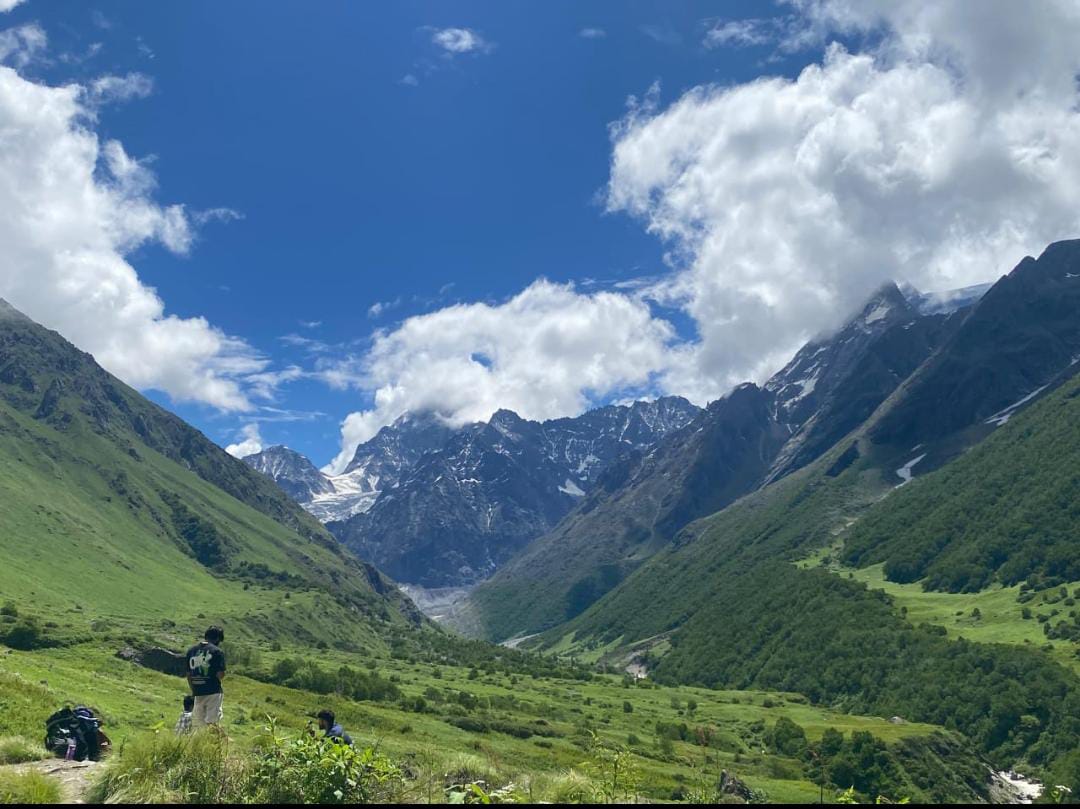
Day 3 forms the absolute emotional core of the entire mountain itinerary. You cross a wooden bridge over the Pushpawati River early in the morning to enter the official national park gates. Suddenly, the narrow gorge opens wide into a massive alpine meadow stretching over 8 kilometers.
Towering, glacier-capped mountain peaks beautifully encircle the endless fields of wild blossoms. Specifically, you can spot rare botanical species like the iconic Himalayan Blue Poppy, purple orchids, and white anemones blooming beside the trail. Because Olixora Travels prioritizes eco-tourism, our groups strictly follow the standard Leave No Trace Principles for Sustainable Trekking to protect these fragile meadows.
The Spiritual Challenge: Ascending to Holy Hemkund Sahib
Fortunately, the dramatic highlights of this journey do not conclude at the valley floor. The following morning demands physical endurance as you tackle a steep, continuous climb toward Hemkund Sahib.
This sacred Sikh shrine sits gracefully at an incredible elevation of 15,200 feet. Breathtaking snow-dusted ridges encircle the crystal-clear, freezing waters of the holy glacial lake. The final section of the trail features a flight of stone steps that tests your lung capacity completely. However, the deep spiritual peace and the hot, fresh langar food inside the shrine reward your physical efforts perfectly.
Best Time to Witness the Peak Floral Bloom
Unlike most Himalayan routes, this high-altitude valley opens exclusively during the monsoon months. The optimal climbing window runs from June to September:
July: The winter snow completely melts. Consequently, the first wave of vibrant green shoots and early summer blossoms carpets the valley floor.
August: The valley reaches its absolute maximum abundance. For instance, hundreds of distinct flower species bloom simultaneously, creating a colorful paradise.
September: The heavy rains begin to clear away. Thus, the floral colors shift beautifully into deep shades of gold and bronze under crisp, sharp skies.
Before booking your departure dates, always check the latest highway updates on the official India Meteorological Department Weather Updates portal.
How to Prepare: Difficulty and Fitness Guidelines
We classify the Valley of Flowers circuit as an Easy-to-Moderate holiday. This rating makes it highly accessible for fit beginners, active senior citizens, and family groups.
Read our comprehensive guide on the Dayara Bugyal Trek to compare beginner-friendly options.
However, you must not underestimate the daily walking distances. You will cover approximately 38 kilometers of mountain terrain over the course of the trek. Therefore, focus on basic leg-strengthening exercises like lunges and squats at least two weeks before your departure date. This preparation ensures you navigate the steep stone steps comfortably.
SECURE YOUR MONSOON DEPARTURE!
Jan
Feb
Mar
Apr
May
Jun
Jul
Aug
Sep
Oct
Nov
Dec
Want to know the available dates? Contact us or click on the below button to book the trek.