

Six Days From First Slide To Full Run.
Where You Actually Learn to Ski
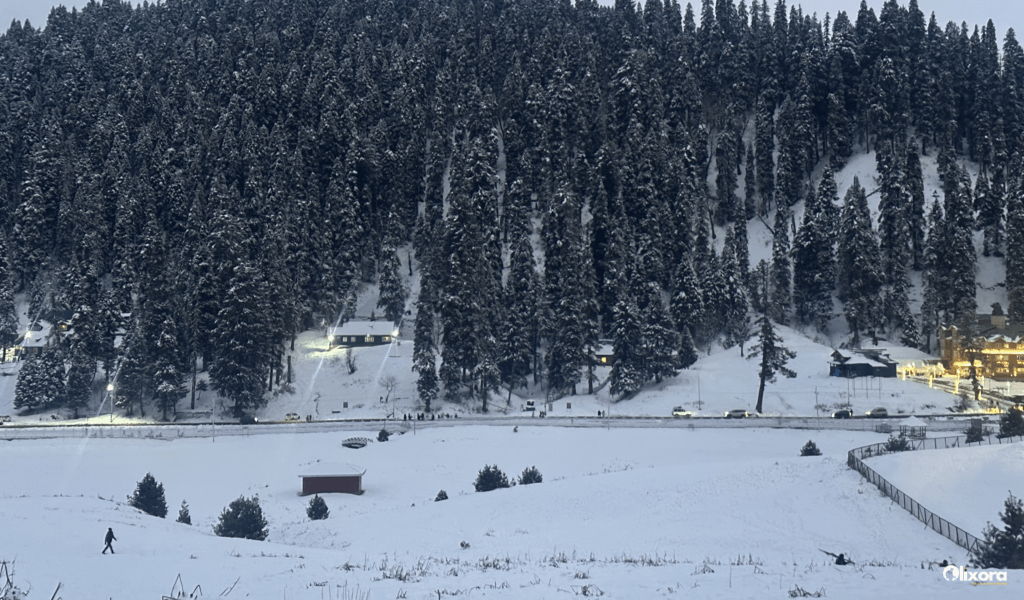
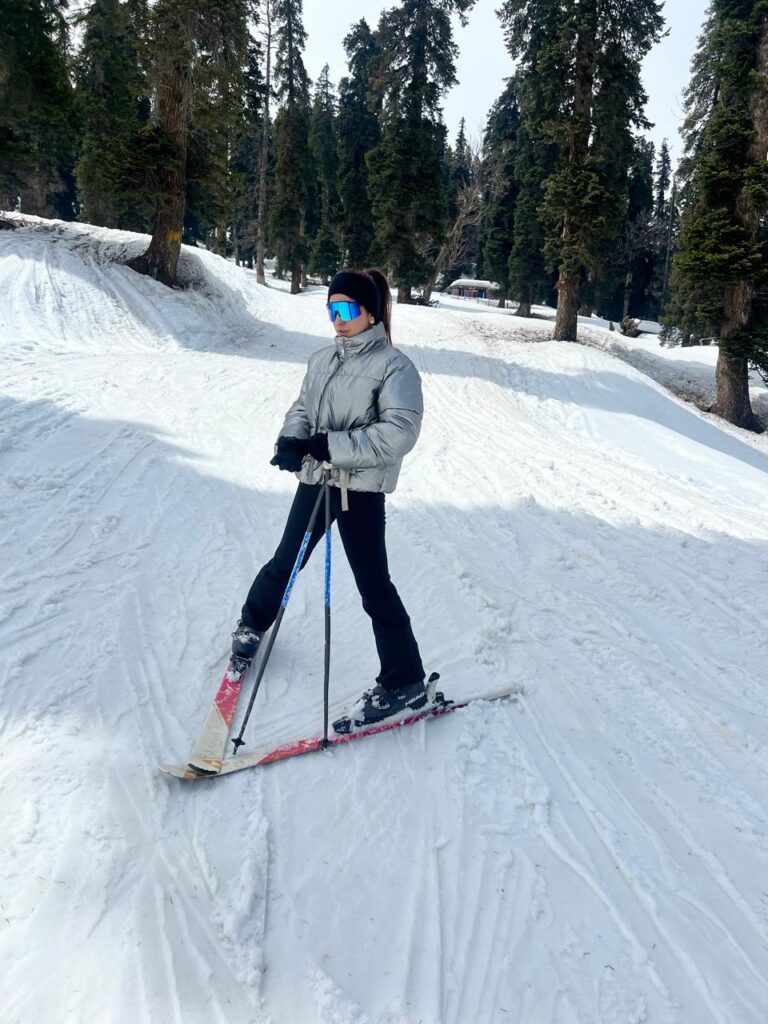
Gulmarg’s reputation is built on Apharwat, the steep off-piste terrain reached from the second phase of the Gulmarg Gondola, which draws expert skiers from around the world. That is not where this course runs. The Winter Ski Course teaches on the gentle groomed slopes near the base in Kashmir, where the lifts are short, the ground barely tilts, and falling over is simply part of the morning.
One New Technique Every Day
The course opens with an arrival-day theory class covering equipment and mountain safety, then builds one skill at a time across six days on snow: the snow plough, the kick turn, the traverse, the stem turn and the uphill christie. On the final day you ride the first phase of the Gondola and ski back down it yourself, with the Pir Panjal range open in every direction. Everyone who finishes leaves with a beginner certification.
Three Students to One Instructor
Group ski lessons commonly run eight or ten students to a single instructor, which means most of your morning is spent watching other people. Every session on this course is capped at three. It is close enough to private coaching that you are never waiting your turn, and it is the difference between a week of lessons and a week of actually skiing.
-
One-to-Three Coaching: A maximum of three students per certified instructor, every single session, with personal feedback throughout the day.
-
Terrain Built for Beginners: Wide, gently graded slopes near the base with short lifts, kept well away from Gulmarg’s expert off-piste bowls.
-
Every Piece of Gear Provided: Skis, boots, poles, helmet and full safety kit are included for the whole course, so nothing needs buying or renting.
-
Your Gondola Run: Phase 1 of the Gulmarg Gondola is included, and on day six you ride it up and ski the run back down under your own control.
-
Beginner Certification: Complete the six days and you leave with a formal beginner certification recognising the techniques you have learned.
Itinerary
Settling in
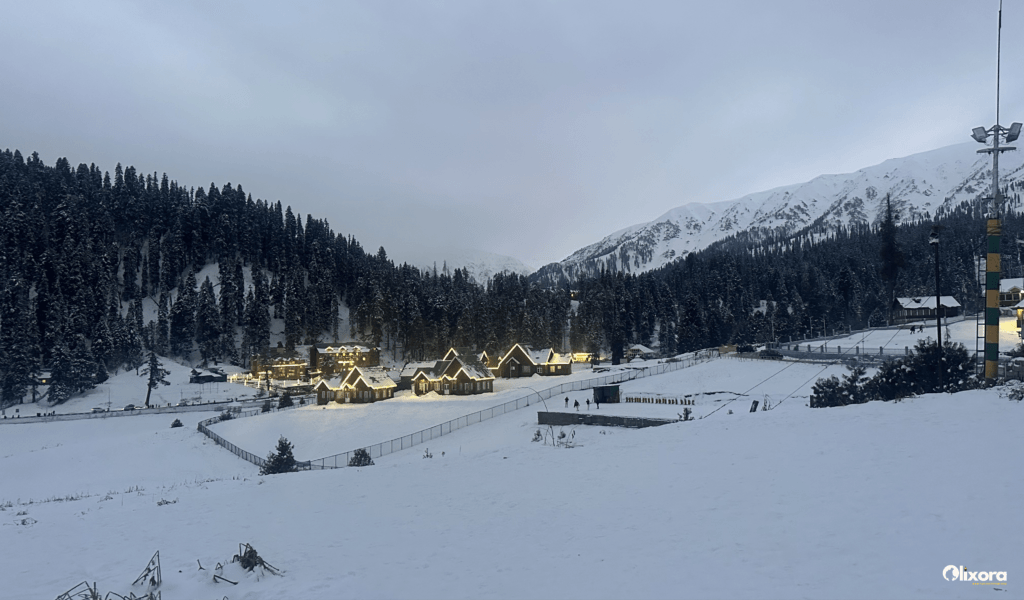
You arrive in Gulmarg, check into your hotel and have the rest of the afternoon free. Nobody skis today — the altitude and the cold both take a few hours to get used to.
The theory class
Before anyone touches snow, your instructor walks the group through what skiing actually involves: how the equipment works, how boots and bindings should feel, how to fall without hurting yourself, and the slope rules that keep everyone clear of each other.
Key Skills
You will understand how your equipment works, know the safety rules of the slope, and arrive at your first session on snow knowing exactly what to expect.
Finding your feet
The first hour stays flat. You learn to stand, shuffle and side-step in ski boots, which feel awkward to absolutely everyone on day one. Nothing points downhill until you are steady on level ground.
The plough, then the turn
Next comes the wedge — tails pushed apart, tips held close, so the inside edges bite and you can control your speed and stop when you choose to. Once stopping is reliable, you press the inside edge of one ski to steer. With three students to an instructor, corrections come as you make the mistake, and most people are linking turns down the nursery slope by the afternoon.
Key Skills
You will control your speed with confidence, perform a safe snow plough stop on command, and complete your first controlled turns on beginner-friendly slopes.
The move itself
The kick turn changes your direction by a full 180 degrees while standing still. You lift the tail of one ski, swing it around to point the other way, plant it, then bring the second ski across to match. It is the first move that requires real balance rather than momentum.
Where you will need it
Every skier uses this constantly without thinking about it. Narrow cat tracks, tight sections between trees, and turning around partway up a traverse all need it, and it is how you reset your position on a slope too steep to simply ski around. Learn it now and the rest of the week gets easier.
Key Skills
You will perform smooth 180° kick turns confidently and reposition your skis efficiently while keeping your balance on traverses and narrow sections of the slope.
Skiing across, not down
Until today everything has pointed downhill. A traverse crosses the slope at an angle instead, with your skis parallel and your weight leaning slightly into the hill so the uphill edges grip. Get that lean right and you hold your line. Get it wrong and the skis slide sideways — which is the single most useful mistake to make early.
Why it matters from here
The traverse is the platform every remaining technique is built on. Tomorrow’s stem turn starts from one, and so does the uphill christie on day five. It is also how you slow down without stopping, and how you cross a slope that feels steeper than you would like to ski straight down.
Key Skills
You will traverse confidently across beginner slopes, hold consistent balance across the fall line, and stop smoothly using proper uphill edge control.
The bridge to parallel skiing
Starting from a traverse, you push the uphill ski out into a small wedge, shift your weight onto it to bring yourself round, then slide the other ski back alongside it. The turn begins in a plough and finishes parallel — which is exactly what the day is for. It is the last technique that still uses the wedge at all.
Where it starts to feel like skiing
This is the day most people stop concentrating on their feet and start looking down the slope instead. Turns link together, the runs get longer, and the plough shrinks a little more with each one. Nothing about the movement is new by now — it is the traverse and the plough turn from earlier in the week, joined up.
Key Skills
You will link controlled stem turns with smooth weight transfer, and finish each one confidently with your skis returning to a parallel position.
Letting the skis skid on purpose
Everything so far has been about keeping the skis gripping. Today you learn to let them slide sideways deliberately. At the end of a turn you guide both skis a little further uphill and allow them to skid, and the rising slope does the braking for you. It is the first time speed becomes something you choose rather than something you survive.
Your first proper stop
The plough was how you stopped in week one. The christie is how skiers actually stop — skis parallel, weight settled, a clean arc up the hill and done. Get comfortable with it here on gentle ground and tomorrow’s run down from the Gondola stops being intimidating, because you already know how to end it whenever you want.
Key Skills
You will finish parallel turns with confidence, manage your speed through deliberate skidding, and bring your skis smoothly uphill into a balanced, controlled stop.
Riding up
Your last morning starts in a cable car. The Gulmarg Gondola lifts you out of the base area and over the treeline, with the Pir Panjal opening out on every side. Your Phase 1 ticket is included in the course, and this is the run the whole week has been building toward.
The side slip
Higher up, the slope steepens. The side slip is your answer to that: stand across the hill, flatten the edges and let the skis slide straight down the fall line, then re-engage the edges to stop. It means no pitch is ever too steep to get down calmly, even the ones you would rather not turn on.
Your graduation run
Then you ski it — the plough, the traverse, the stem turn and the christie all used together on real mountain terrain, six days after your first shuffle on flat snow. Your beginner certification is awarded at the bottom. Most groups head back down to Srinagar the same afternoon for evening flights.
Key Skills
You will ski confidently from the first phase of the Gondola, perform controlled side slips on steeper terrain, and finish the course with the skills to take independent runs of your own.
Five ways to stay. One course.
Every tier runs the same six-day beginner programme with the same instructors. The only thing that changes is where you sleep and eat at the end of the day.
In every tier
- 6 days of coaching
- 1:3 instructor ratio
- All ski gear
- Unlimited lift passes
- Gondola Phase 1
- Breakfast & dinner
- Certification
- GST
- Hut stay
- Standard room
- Warm & simple
- Mountain lodge
- Premium heating
- Upgraded service
- Heated rooms
- Mountain views
- Short walk to lifts
- Boutique rooms
- Gourmet dining
- Steps from lifts
- Five-star resort
- Spa access
- Concierge
Tiers are chosen at the date-selection step. Pick your dates using Check Availability, then select the stay you want.
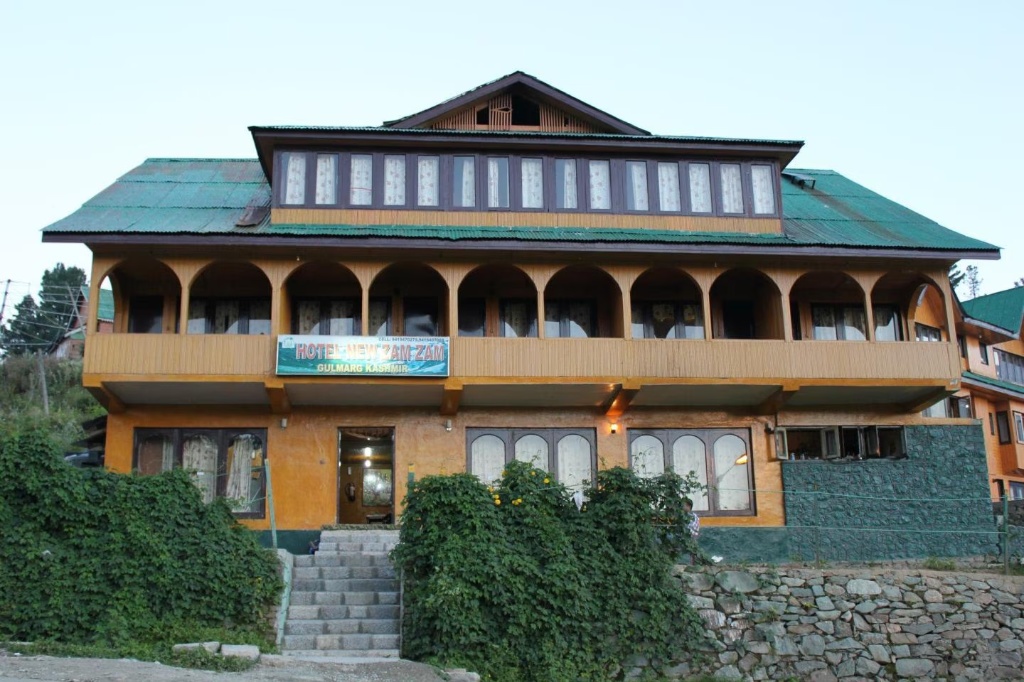
Hotel Zam Zam
Basic · Essential · Hut Stay
A comfortable, clean and warm essential stay designed for a restful night after a long day on the slopes. Basic amenities and hearty meals to keep you going.
Choose this tier at the date-selection step. Start with Check Availability, pick your departure, then select Basic.
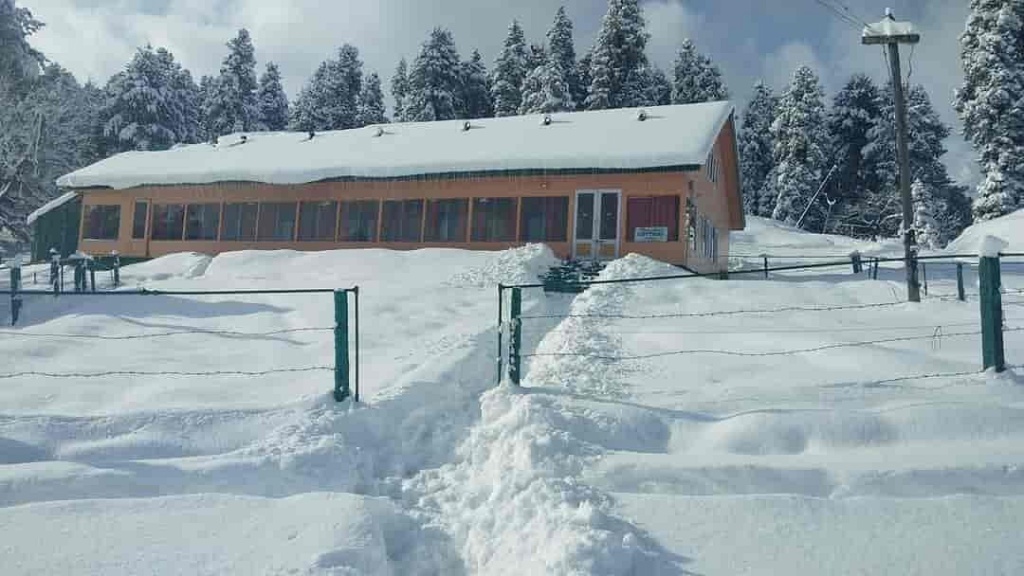
Roseland Cottage
Silver · Comfort · Gulmarg Inn · Ski Lodge · Poshwan
Upgraded comfort with premium heating and attentive service. These comfort-tier properties offer an authentic mountain lodge experience, made for relaxing after a day in the snow.
Choose this tier at the date-selection step. Start with Check Availability, pick your departure, then select Silver.
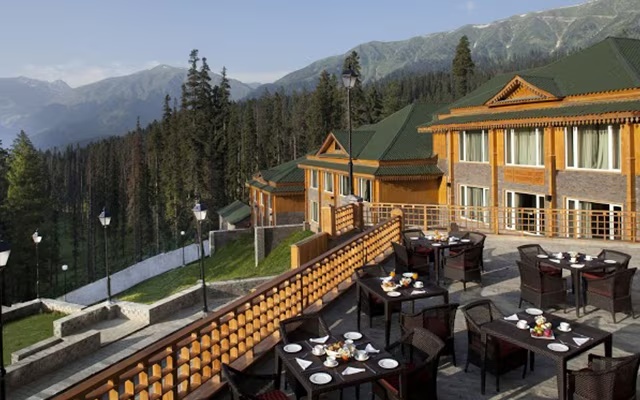
Hotel Welcome & The Gold Collection
Gold · Premium · Welcome · Affarwat · Poshwan
Our most-booked tier pairs comfort with location — spacious heated rooms, hot meals and a short walk to the lifts. Choose from Hotel Welcome, Hotel Affarwat or Hotel Poshwan.
Choose this tier at the date-selection step. Start with Check Availability, pick your departure, then select Gold.
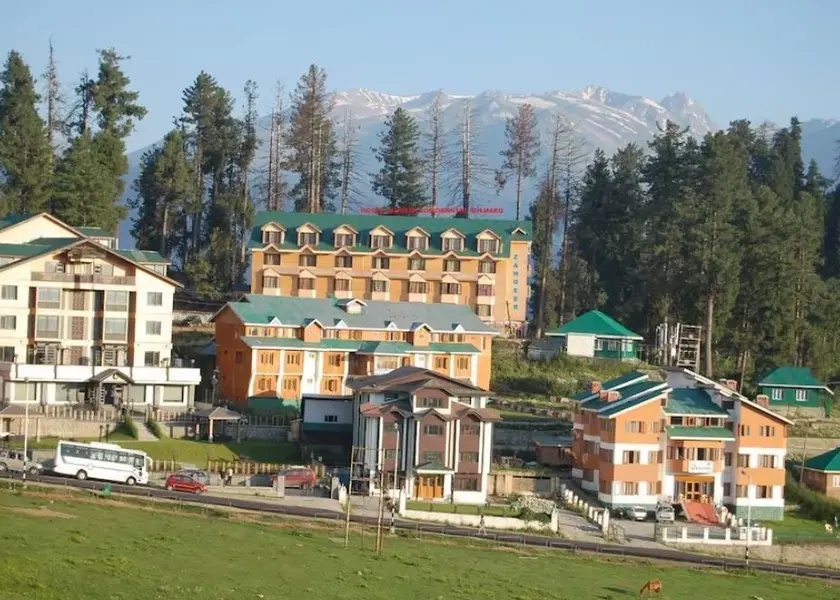
Hotel Zahgeer
Diamond · Luxury · Lupin · Meadows
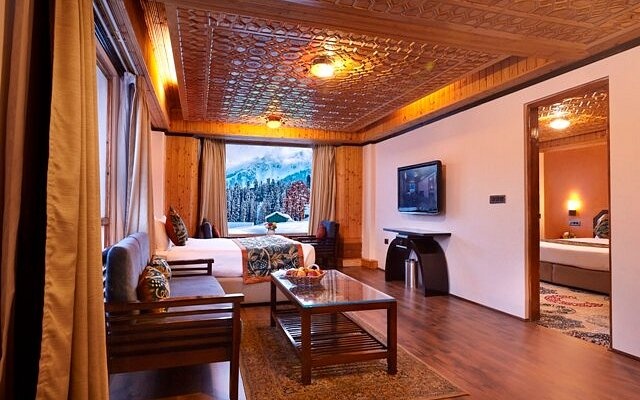
Exclusive boutique luxury. These properties offer personalised service, elegant alpine architecture, gourmet dining and immediate proximity to the ski lifts.
Choose this tier at the date-selection step. Start with Check Availability, pick your departure, then select Diamond.
Grand Mumtaz
Platinum · Signature · Vintage · Royal Castle · Hilltop
The pinnacle of Gulmarg hospitality. Five-star resort amenities, private concierge, spa access, lavish buffets and the signature mountain experience.
Choose this tier at the date-selection step. Start with Check Availability, pick your departure, then select Platinum.
What the price covers.
One inclusive price for the whole course. Here is exactly what sits inside it and what does not, so nothing is a surprise when you arrive.
The same course, whichever stay you choose.
-
Ski gearSkis, boots, poles, helmet and full safety kit for the whole course.
-
Coaching, 1:3 maximumSix days with certified instructors, never more than three students each.
-
Lift passesUnlimited access to the ski lifts throughout the course.
-
Gondola ticketPhase 1 of the Gulmarg Gondola, which you ride on day six.
-
AccommodationFive tiers, from a warm hut stay through to a five-star resort.
-
Breakfast and dinnerTwo meals daily at your hotel for the length of your stay.
-
Beginner certificationAwarded when you complete your final run on day six.
-
GSTAll applicable taxes. The price you see is the price you pay.
Worth budgeting for separately.
-
AirfareFlights to and from Srinagar.
-
Airport transfersSrinagar to Gulmarg and back. We can arrange this at extra cost.
-
LunchMidday meals on the mountain are not part of the package.
-
Travel insuranceNot provided, and strongly recommended for a winter sports trip.
-
Other snow activitiesSledding, ice skating, snowmobiles and similar add-ons.
-
Photo and videoPersonal photography or videography coverage.
-
Personal expensesRoom service, beverages, laundry, shopping and anything similar.
Anything not listed above sits outside the package. If you are unsure about a cost, ask before you book — we would rather tell you now than at the hotel desk.
When to learn in Gulmarg.
The course runs from December through March. Every month works, but they do not work the same way — here is what each one actually gives you, and what it costs you.
December
Early season- The first powder of the winter
- Quietest slopes of the season
- Crisp, dry early-winter air
Cover can still be thin in the first half of the month. Later December is the safer bet.
January
Deepest snow- The deepest, most reliable snowpack
- Frequent fresh snowfall
- The mountain at its most dramatic
The coldest weeks of winter, often below freezing all day. Heavy snow can close the gondola.
February
Our recommendation- Settled, consistent snow underfoot
- The best visibility of the season
- The most predictable weather
- Cold enough to hold, mild enough to learn
Our busiest month by some distance. February departures fill first, so book early.
March
Spring skiing- The longest daylight of the season
- Warm enough to enjoy standing still
- Softer snow, which forgives a fall
Snow softens through the afternoon, so mornings ski best. The season can end quickly in late March.
Mountain conditions vary from year to year, and no month is guaranteed. If you are unsure which suits you, tell us your dates and we will say honestly whether they are a good week to learn. February is the safest choice for a first-timer.
See departure datesTake the whole course with you
The full brochure, so you can read it offline or send it to whoever you are travelling with.
- Day-by-day itinerary
- All five stay tiers
- Packing list
- Departure dates
- Safety standards
FAQs
Yes. Gulmarg has wide, gently graded beginner slopes near the base, served by short lifts, and this is where our course runs. The confusion comes from Gulmarg's reputation, which is built on Apharwat — the steep off-piste terrain reached from Gondola Phase 2, which genuinely is expert-only. Those are two different parts of the mountain. Most people on our course have never stood on skis before, and they finish the week skiing a run back down from Gondola Phase 1.
Most people can control their speed, stop safely and link basic turns after four to six days of structured coaching. Our course runs six days on snow and adds one technique per day: the snow plough, the kick turn, the traverse, the stem turn, the uphill christie, and finally the side slip. On day six you ride the gondola and ski back down. Progress depends far more on coaching ratio than on natural ability — with three students per instructor you get corrected as you make the mistake rather than at the end of the session.
Our six-day beginner course starts at ₹22,499 per person and runs to ₹76,999, and the only thing that changes across those five tiers is the hotel. Every tier includes six days of coaching, all ski gear, unlimited lift passes, a Gondola Phase 1 ticket, breakfast and dinner daily, beginner certification and GST. Not included: flights to Srinagar, airport transfers, lunch on the mountain, and travel insurance. Booked separately, ski hire and instruction in Gulmarg typically runs ₹1,000–₹2,000 per day before accommodation.
February is the best month for learning. The snowpack has settled, visibility is at its best, and the weather is the most predictable of the season. January has the deepest snow but the coldest days, and heavy snowfall can close the gondola. December can still have thin cover in the first half of the month. March brings the longest daylight and softer, more forgiving snow, but it softens through the afternoon and the season can end quickly. The course runs December through March.
Gulmarg operates as a working ski resort every winter and receives visitors from across India and abroad. The resort maintains a ski patrol, avalanche monitoring and rescue services. Travel advisories for Jammu and Kashmir differ between countries and change over time, so check your own government's current advisory before booking. On the mountain, we monitor daily weather and avalanche bulletins before every session and suspend activity when conditions are unsafe, all instructors and crew are first-aid and CPR trained, a local doctor is on call, and every participant is issued a helmet and full safety gear.
Both work for beginners, and the honest answer depends on your dates and your route. Auli is closer to Delhi by road and simpler logistically, but its slopes face south, so sun ices them and its reliable window narrows to roughly mid-January to mid-February. Gulmarg holds snow from December into March, has far more lift infrastructure, and sits about two hours from Srinagar airport — against eight to ten hours of mountain road from Dehradun to Auli. On a six-day course that difference is a full day at each end. If you can only travel in December or March, Gulmarg is the only real option.
No. Skis, boots, poles, a helmet and full safety kit are included in every tier of the course, fitted to you on arrival. You do not need to buy or rent anything. What you do need to bring is your own clothing: thermal base layers, a waterproof outer layer, warm gloves, thick socks and UV-rated goggles or sunglasses. Beginners spend a lot of the first day sitting in the snow, so waterproof trousers matter more than most people expect.
Three layers. A thermal base layer top and bottom, a fleece or light insulated mid-layer, and a waterproof, windproof outer jacket and trousers. Add waterproof gloves, a warm hat, thick ski socks — one pair, not two — and UV-rated goggles or sunglasses, since glare off snow at altitude is severe. Sunscreen is essential even on overcast days. Skip cotton entirely: it holds moisture and gets cold once you start falling over, which you will.
Gulmarg is about 50 km from Srinagar airport and takes roughly two hours by road, longer after fresh snowfall. Taxis are available at the airport, and we can arrange a transfer at additional cost — airport transfers are not included in the course price. Srinagar is served by direct flights from Delhi, Mumbai and several other Indian cities. In winter the road is cleared regularly, but heavy snow can slow the final stretch above Tangmarg, so allow buffer time on arrival day.
The Gulmarg Gondola runs in two stages. Phase 1 carries you from the base up to Kongdoori, where the terrain is manageable and where beginners ski. Phase 2 continues up towards Apharwat, giving access to steep off-piste bowls that suit experienced skiers only. Our course includes a Phase 1 ticket, which you use on day six to ride up and ski the run back down. Phase 2 is not part of the course and is not terrain a first-week skier should be on.
You do not need to be an athlete, but skiing is more tiring than it looks. Expect to use your legs and core continuously, and to spend energy simply getting up after falls on the first two days. If you can walk for an hour without difficulty, you will manage the course. Some general leg strength work in the weeks before you travel — squats, lunges, stairs — makes the first two days noticeably easier. Gulmarg sits at altitude, so most people also feel breathless for the first day or so.
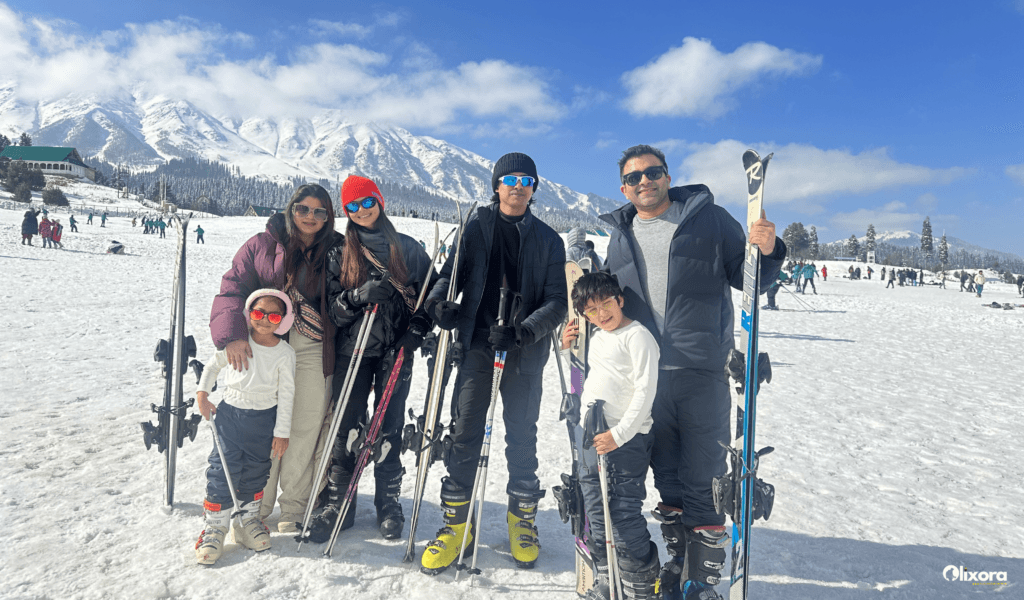
Yes. Children take to skiing quickly, often faster than adults, largely because they have less fear of falling and a lower centre of gravity. Our instructors and crew have experience teaching children and are first-aid and CPR trained, and every child is issued a properly fitted helmet. Family groups are common on the course, and with three students per instructor a parent and child can often learn together rather than being separated into different classes.